Intent
At Ladygrove Primary School and Nursery, we strive to ensure that our Design and Technology curriculum offers all pupils an opportunity to develop their creativity, imagination and subject knowledge. Design and Technology lends itself to cross-curricular links with a broad range of subjects, such as Mathematics, Science, Engineering, Computing and Art, which we embrace through STEM based activities. We encourage children to be risk takers by exposing them to problem solving in a variety of creative contexts. Through designing, making and evaluating their ideas, the children are taught to think critically, whilst considering the needs, wants and values of themselves and others. We aspire to prepare our children to be the innovators of the future, prepared to deal with tomorrow’s rapidly changing world.
Something, for someone, for some purpose.
Implementation
- Our Design and Technology curriculum is guided by the National Curriculum,
 focussing on the three main elements of the design cycle: design, make and evaluate.
- Each design process is underpinned by technical knowledge which is linked to the specific topic being covered.
- D & T taught in blocks as appropriate to ensure effective teaching and progression, building on prior knowledge and skills.
- We use a cross-curricular approach where possible.
- Kapow Primary supports the teaching and learning of D & T to assist teachers’ workload.
- Teachers have a clear understanding of the objectives to be taught in each topic and area.
- Termly monitoring of Design and Technology in the form of book looks, pupil voice and learning walks.
Impact
- Children will be confident in Design and Technology and will know more and remember more, applying these skills to other areas of the curriculum.
- Children will understand of the principles of healthy eating, diets, and recipes, including key processes, food groups, cooking equipment and environmental impact (farm to fork).
- Children will have an appreciation for key individuals, inventions and events in history and of today that impact our world.
- Children will self-evaluate and reflect on learning at different stages and identify areas to improve.
- The vast majority of children will achieve age-related expectations in Design Technology.
- As designers, children will develop skills and attributes they can use beyond school and into adulthood.
D and T in EYFS
Opportunities for Design and Technology learning – linked with 2020 Development Matters document and the Early Learning Goals.
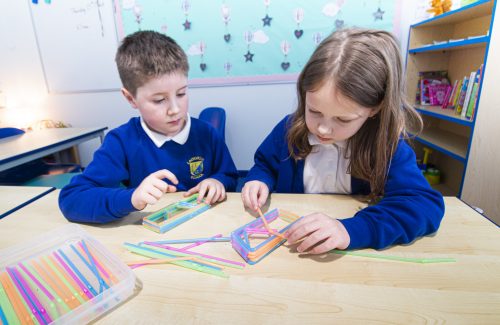
In the Early Years Foundation Stage, children are taught to safely use and explore a variety of materials, tools and techniques and to experiment with different colours and textures. They are provided with the opportunities make and create props when role playing and share their ideas, explaining what they have made.
D and T in KS1
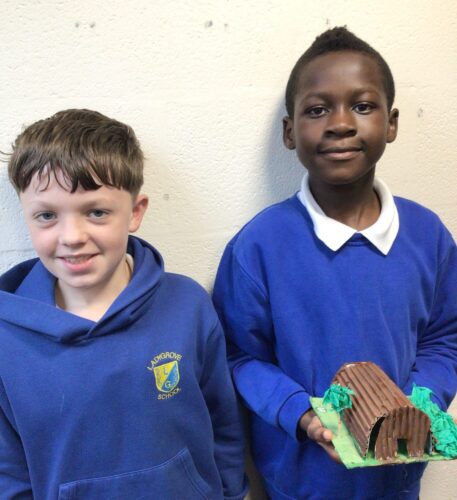
In Key Stage 1, children are taught the basic skills needed to allow them to carry out the designing, making and evaluating process. Through making models, the children are exposed to different materials and components, such as construction materials, textiles and ingredients, in order to explore the different areas of Design and Technology.
D and T in KS2
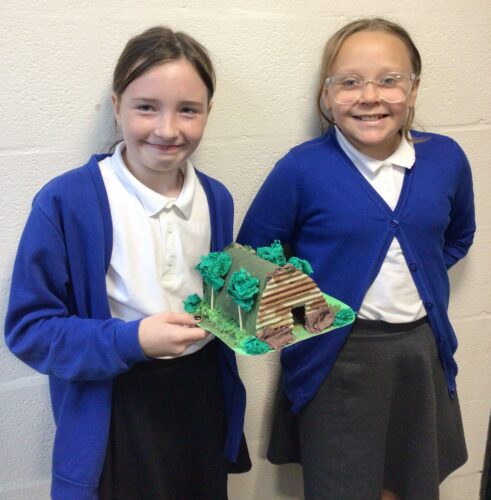
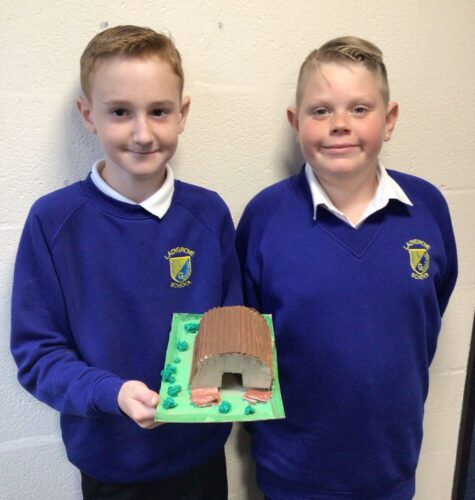
Building upon Key Stage 1, children widen their use of tools and materials throughout Key Stage 2 to continue to develop their designing and making skills. Through evaluating their ideas and products, along with those of other inventors and designers, children learn to be self-critical and innovative in order to make positive changes to the world they live in.
How we support SEND in Design and Technology
- Focused practical tasks for practising skills
- Loop scissors, chunky pencils, and adapted equipment
- Adaptive teaching
- Pre-teaching vocabulary
- Large needles
- Blunt knives for cooking
- Assistive technology
Spiritual, Moral, Social and Cultural Development (SMSC)
The teaching of Design and Technology offers opportunities to support the social development of our children through the way we expect them to work with each other in lessons. Our groupings allow children to work together and give them the chance to discuss their ideas and feelings about their own work and the work of others. Through their collaborative and co-operative work across a range of activities and experiences in Design and Technology, the children develop respect for the abilities of other children and a better understanding of themselves. They also develop a respect for the environment, for their own health and safety and for that of others. They develop their cultural awareness and understanding, and they learn to appreciate the value of differences and similarities.
National Curriculum Link
National Curriculum – Design_and_technology
Planning Links and End Points
Design and Technology and Art Long Term Plan 24-25
Knowledge and Skills Progression Documents
Ladygrove D and T Knowledge and Skills by Strand
By the end of their time at Ladygrove, children should:
- have developed their creative, technical and practical expertise needed to perform everyday tasks confidently and to participate successfully in an increasingly technological world
- have built and be able to apply a repertoire of knowledge, understanding and skills in order to design and make high-quality prototypes and products for a wide range of users
- critique, evaluate and test their ideas and products and the work of others
- understand and apply the principles of nutrition and learn how to cook.