Subject Intent
At Ladygrove Primary School we endeavour to not only develop and promote a child’s academic ability, but to focus on the whole child. PSHE lessons give all children the opportunity to attain relevant learning experiences which help them navigate their world and develop positive relationships with themselves and others.
A strong emphasis is placed on emotional literacy, building resilience and nurturing mental and physical health. We follow the Jigsaw 3-11 scheme which offers engaging and relevant PSHE within a whole-school approach. This is implemented by a whole school approach to develop children’s understanding of self-regulation through teaching about ‘The Chimp Paradox’. Mindfulness is taught to allow children to advance their emotional awareness, concentration and focus.
The Jigsaw approach consists of six half-term units of work (Puzzles), each containing six lessons (Pieces) covering each academic year.
Every Piece has two Learning Intentions, one specific to PSHE (including Relationships and Health Education) and the other designed to develop emotional literacy and social skills.
Puzzles are launched with a whole-school assembly containing an original song, with each year group studying the same unit at the same time (at their own level), building sequentially through the school year, facilitating whole-school learning themes.
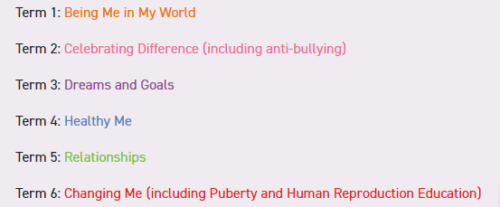
Being in my world: this includes understanding my place in the class, school and global community as well as devising Learning Charters.
Celebrating difference: this includes anti-bullying (cyber and homophobic bullying included) and diversity work.
Dreams and goals: this includes goal-setting, aspirations for yourself and the world and working together.
Healthy Me: this includes drugs and alcohol education, self-esteem and confidence as well as healthy lifestyle choices.
Relationships: this includes understanding friendship, family and other relationships, conflict resolution and communication skills.
Changing me: this puzzle includes sex and relationships education in the context of coping positively with change. (includes age-appropriate sex education)
Jigsaw-information-leaflet-for-parents-and-carers
How we support SEND in PSHE
- Adaptive teaching
- Partner and group work
- Modelling and acting out scenarios
- Widgit symbols (visuals)
- Pre-teaching vocabulary
- Turn taking practice during circle time
- Socially Speaking intervention
- Social stories
- Word mats
No Outsiders
At Ladygrove Primary School, we aim to teach the children to recognise and
accept difference. We have a duty to prepare them for modern life in Britain. In
school and their future workplace they will be working alongside peers and
colleagues of different race, religion, gender, age, disability and sexual orientation.
It is paramount that future generations are able to accept differences, accept the
views of others and treat each other with respect, even if they disagree. We expect
the children to express their views with kindness and consideration for the feelings of
others. Our key message is that we are all equal and we all belong, we are all
insiders, there are no outsiders in our school. In order to promote this ethos at Ladygrove, we have chosen to use a resource that embeds equality, called ‘No
Outsiders.’
RSE at Ladygrove
At Ladygrove, we use Jigsaw, the mindful approach to PSHE, as our scheme of work for Personal, Social, Health and Economic (PSHE) Education. The programme consists of six half-term units, each with six lessons. We call these Jigsaw ‘Puzzles’: Being Me in My World, Celebrating Difference, Dreams and Goals, Healthy Me, Relationships and Changing Me.
New RSHE guidance: what parents need to know – The Education Hub
jigsaw-information-leaflet-for-parents-and-carers-2026
During the first half of the Summer Term, children take part in the Relationships Puzzle. Relationships Education is statutory, and parents cannot withdraw their child from this aspect of the curriculum.
Positive relationships are promoted throughout the school year and across all Jigsaw Puzzles. Within this unit, children learn about friendships, family relationships, communities, mutual respect, healthy boundaries and staying safe online. They also explore how relationships change and develop as we grow.
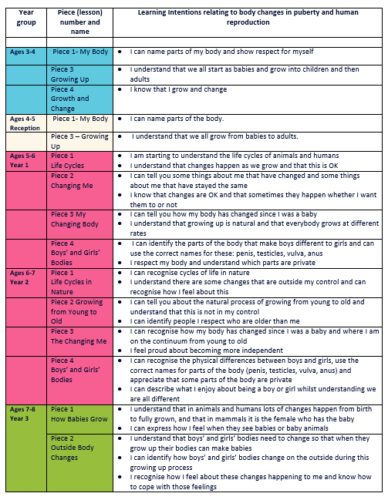
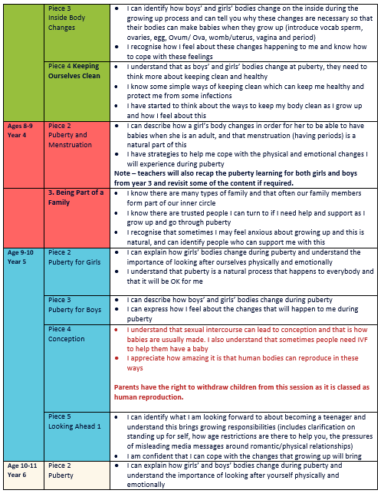
During the second half of the Summer Term, children take part in the Changing Me Puzzle. This unit helps children understand and manage change positively. In Key Stage 2, pupils learn about puberty and the physical and emotional changes associated with growing up. In Key Stage 1, children are introduced to the correct scientific vocabulary for body parts, including genitalia. This supports our safeguarding curriculum and provides foundations for later learning about puberty and human development.
Health, Relationship and Sex Education
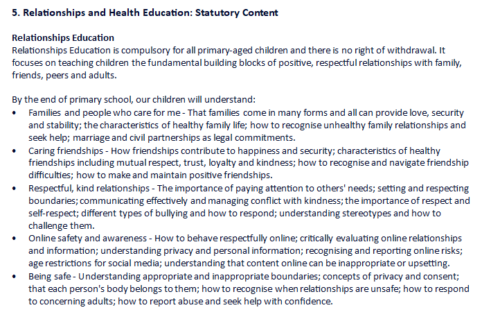
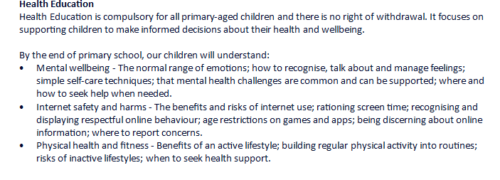
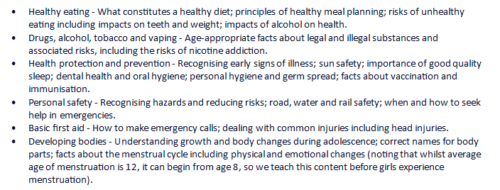
Relationships Education and Health Education are statutory in all primary schools.
The statutory Relationships and Health Education curriculum is woven throughout the Jigsaw programme, with particular emphasis within the Healthy Me, Relationships and Changing Me Puzzles.
In the Early Years and Key Stage 1, the focus is on life cycles, valuing and understanding our bodies, recognising feelings and emotions, forming positive relationships, and learning appropriate vocabulary for body parts. Children are taught the correct anatomical language to support both health education and safeguarding.
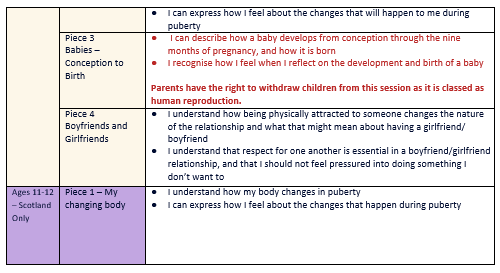
In Key Stage 2, there is a greater focus on the health education aspects of puberty, including menstruation, emotional wellbeing and the physical changes that occur as children grow. Learning is delivered in an age-appropriate way that helps pupils feel prepared for these changes and encourages them to seek support from trusted adults at home or at school if they have questions or concerns.
At Ladygrove, sex education complements the statutory Relationships and Health Education curriculum. It is taught through the Jigsaw Changing Me Puzzle and is delivered in a sensitive, age-appropriate manner. Please note that aspects of human development and reproduction also form part of the National Curriculum Science programme, which is statutory for all pupils.
Withdrawing your child
Parents do not have the right to withdraw their child from Relationships Education, Health Education or the National Curriculum Science curriculum.
Parents have the right to request the withdrawal of their child from any sex education that is delivered beyond the National Curriculum Science requirements. Requests should be made in writing to the Headteacher and will be considered in line with the school’s RSHE Policy.
We are committed to working in partnership with parents and carers and welcome any questions or discussions regarding RSHE curriculum content. Parents and carers are encouraged to contact the school if they would like further information or wish to view curriculum materials.
Keeping Children Safe
Through our PSHE and RSHE curriculum, children learn how to keep themselves safe both online and offline. This includes understanding healthy relationships, recognising unsafe situations, respecting personal boundaries, identifying trusted adults, staying safe online and knowing how to report concerns. These themes form an important part of our wider safeguarding curriculum and support children in becoming safe, confident and responsible citizens.
Frequently Asked Questions about Relationships and Sex Education
Knowledge and Skills Progression Documents